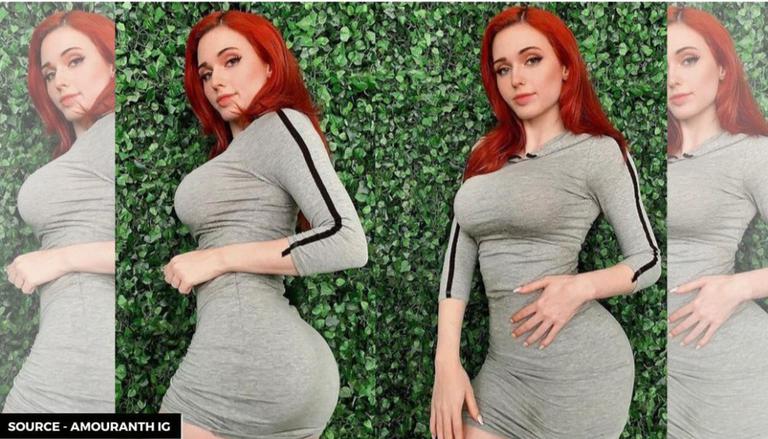
In October 2021, when OnlyFans briefly announced—and then hastily reversed—a ban on sexually explicit content under pressure from banking partners, the platform's top creators didn't panic. They diversified. Kaitlyn "Amouranth" Siragusa, already earning an estimated $1.5 million per month on the platform, used the scare as a stress test for a business model she had been quietly building for years: a holding company disguised as a personality brand. The episode revealed a truth that legacy media has been slow to grasp. The creator economy's upper echelon isn't merely surviving on subscription revenue; they are deploying it with the capital allocation discipline of private equity firms.
The numbers are staggering, and they are no longer rumors. In 2022, Forbes estimated Siragusa's gross earnings at $57 million, placing her among the highest-paid entertainers on the planet—above LeBron James and Bad Bunny in that specific fiscal window. Corinna Kopf reportedly cleared $4.2 million in a single month during her 2021 debut. Danielle Bregoli, known as Bhad Bhabie, claimed $1 million in her first six hours. But the headline figures obscure the mechanics. The real story is not the revenue; it is the retention, the conversion funnels, and the ruthless redeployment of cash flow into illiquid, tax-advantaged assets that survive platform risk.
The Mathematics of the 80/20 Split
OnlyFans operates on a deceptively simple economic engine: the platform takes 20%, the creator keeps 80%. Compared to the 50/50 splits standard on legacy camming sites like MyFreeCams or Chaturbate, or the 45/55 ad-revenue share on YouTube, the terms are generous. But the topology of earnings on OnlyFans is radically different from ad-supported platforms. There is no algorithmic discovery feeding new eyeballs to top creators. Growth is almost entirely exogenous—driven by traffic funneled from Instagram, TikTok, Twitch, and X (formerly Twitter).
This creates a two-layer revenue model. The base layer is subscriptions, typically priced between $4.99 and $24.99 monthly. The high-margin layer is pay-per-view (PPV) messages—locked content sent via direct message, often priced $10–$100 per unlock. Industry operators estimate that for top 0.1% creators, PPV constitutes 60–75% of gross revenue. A creator with 10,000 subscribers at $15/month generates $150,000 in recurring revenue before fees. But if 3% of that base purchases a $50 PPV drop weekly, that adds $600,000 monthly in high-velocity cash flow.
"The subscription is the retainer. The PPV is the upside. Smart creators treat the sub price as a customer acquisition cost, deliberately underpricing it to maximize the funnel for high-margin direct messages."
Retention dynamics are brutal. Monthly churn rates for adult creators typically range 15–25%, meaning a creator must replace their entire subscriber base every four to six months. This forces a relentless content cadence and aggressive cross-platform marketing. Siragusa has spoken publicly about streaming 12-hour days on Twitch—often in the Just Chatting category—to maintain top-of-funnel visibility. The economics demand it: every lost subscriber is a permanent reduction in the PPV addressable market.
The Diversification Playbook: From Cash Flow to Capital Formation
What separates the moguls from the merely viral is what happens after the money hits the bank account. The marginal tax rate on ordinary income for top earners in the United States approaches 50% when combining federal, state, and self-employment taxes. The marginal tax rate on long-term capital gains and qualified dividends tops out at 23.8%. The arithmetic dictates the strategy: convert ordinary income into appreciating assets as fast as legally possible.
Siragusa's holding company, Realty Income-style, has acquired a portfolio of gas stations, convenience stores, and automotive service centers—triple-net lease properties where tenants cover taxes, insurance, and maintenance. In 2022, she disclosed the purchase of a 7-Eleven-anchored plaza for $10 million and a Sheetz gas station for $3.2 million. These assets generate passive income taxed at preferential rates, depreciate on paper to shield other income, and appreciate in real terms. She has also invested in a plastic ball manufacturer and an inflation-protected bond ladder.
"I don't want to be the face of the brand forever. I want the brand to own things that don't need my face."
Corinna Kopf followed a parallel path. After her OnlyFans windfall, she invested in a diversified equities portfolio, high-yield savings instruments, and—critically—equity stakes in early-stage consumer brands, effectively acting as an angel investor with distribution. Bhad Bhabie, advised by music industry veterans, channeled earnings into a music catalog acquisition strategy and real estate in Florida's tax-advantaged environment. Each creator has effectively built a family office before the age of 25.
The Platform Risk & Censorship Paradox
The 2021 OnlyFans policy reversal was a watershed moment. It exposed the structural vulnerability of the entire creator economy: distribution is rented, not owned. The pressure came not from OnlyFans itself, but from its banking partners—Metro Bank, BNY Mellon, and JPMorgan Chase—who threatened to sever payment processing relationships under "reputational risk" frameworks. Mastercard and Visa had already updated their standards for adult content platforms, requiring heightened moderation and identity verification. The message was unambiguous: the financial infrastructure of the adult internet is controlled by a handful of intermediaries who can deplatform an entire business model overnight.
This "debanking" risk is why top creators are obsessive about owning their audience relationships. Email lists, Discord communities, and owned websites are not marketing channels; they are contingency infrastructure. Siragusa has invested in developing proprietary streaming technology and a direct-to-fan platform to reduce reliance on OnlyFans' payment rails. The strategy mirrors the OnlyFans playbook itself: the platform was built because sex workers were deplatformed from Patreon and mainstream payment processors. The lesson compounds—each layer of intermediation is a point of failure.
The paradox deepens when considering content moderation. Platforms like Twitch and Instagram enforce ambiguous "sexual content" policies that disproportionately flag adult creators' promotional material, while allowing equivalent suggestiveness from mainstream celebrities. This forces creators into a shadow marketing economy—using coded language, link-in-bio tools, and live interactive webcams on alternative platforms to funnel traffic without triggering automated takedowns. The cost of compliance is a tax on growth that non-adjacent creators simply do not pay.
The Live Streaming Ecosystem: Top of Funnel as Loss Leader
To understand the OnlyFans mogul model, one must understand the symbiotic—and often parasitic—relationship with live streaming platforms. Twitch, YouTube Live, and Kick serve as unpaid customer acquisition channels. Creators broadcast for hours in "hot tub," "ASMR," or "Just Chatting" categories, monetized minimally through platform subscriptions ($2.50 net per sub after Twitch's 50% cut) and donations. The real ROI is the funnel conversion to OnlyFans.
Siragusa pioneered the "hot tub meta" in 2021, streaming from an inflatable pool in a bikini to maximize Twitch discoverability while staying within terms of service. The category exploded, drawing millions of concurrent viewers and intense media scrutiny. Twitch eventually created a dedicated "Pools, Hot Tubs, and Beaches" category—a rare instance of platform policy adapting to creator innovation. But the economics remain: a Twitch sub is worth ~$2.50/month with high churn; an OnlyFans sub is worth ~$12/month with PPV upside. The stream is a loss leader. The creator video archives clipped from these streams then populate TikTok, Reels, and Shorts, extending the funnel's reach algorithmically.
This cross-platform arbitrage is the moat. A creator who relies solely on OnlyFans' internal discovery (which barely exists) will fail. A creator who masters the meta-game of platform-specific content formatting—vertical clips for TikTok, long-form for YouTube, live engagement for Twitch, locked content for OnlyFans—builds a media conglomerate. The content is repurposed, not recreated. The marginal cost of distribution approaches zero.
The Next Generation: Brand Equity as Balance Sheet Asset
The playbook is codifying. Emerging creators are incorporating earlier, hiring CFOs before managers, and negotiating equity in the platforms they build audiences on. The rise of creator-led venture funds—such as Siragusa's announced intention to launch a consumer-focused fund—signals a maturation: the most successful creators are becoming the capital allocators for the next wave.
But the regulatory horizon is darkening. The EARN IT Act and similar legislation globally threaten to erode Section 230 protections and impose liability on platforms for user-generated content. Age verification mandates in Louisiana, Utah, and the UK create friction that reduces conversion rates. Payment processors continue to tighten adult content policies under pressure from anti-trafficking NGOs and political actors. The moguls who survive the next decade will be those who treat political risk as a line item—lobbying, litigating, and architecting jurisdictional arbitrage with the same rigor they apply to content calendars.
The shift from stigma to empire is complete. The women (and men) building these conglomerates are not "internet famous"—they are operators of high-velocity, high-margin media businesses with better unit economics than most public companies. They understand retention cohorts, customer lifetime value, tax-alpha strategies, and platform dependency risk better than the venture capitalists funding the "creator economy" tools meant to serve them. The only question is whether the financial infrastructure of the internet will evolve to serve them, or whether they will be forced to build their own banks, too.
Key Financial Metrics: Top-Tier OnlyFans Creator Economics (Estimated)
- Platform Fee: 20% (OnlyFans standard split)
- Monthly Churn: 15–25% (industry estimates)
- PPV Attachment Rate: 3–8% of active subs per drop (top 0.1%)
- Average PPV Price Point: $15–$100+
- Net Revenue Retention (Monthly): 85–95% (including expansion via PPV)
- Effective Tax Rate (Ordinary Income, CA/NY): ~50%+
- Effective Tax Rate (Long-Term Capital Gains): 20–23.8%
Diversification Vehicles Deployed by Top Creators
- Triple-net lease commercial real estate (gas stations, convenience stores, auto repair)
- Equity portfolios (public equities, ETFs, direct indexing)
- Angel/VC investments in consumer apps, fintech, and creator tools
- Private credit / high-yield savings / T-bill ladders
- Proprietary IP & technology (streaming platforms, merch supply chains)
- Music catalog / royalty acquisitions (Bhad Bhabie model)